
How Humans Learned to Measure Time
Every civilization has needed to answer the same question:
What time is it?
Long before mechanical clocks, people estimated time by observing the natural world. The movement of the Sun across the sky divided the day, the changing phases of the Moon measured the months, and the seasons marked the passing of each year.
As societies became larger and more organised, this was no longer enough. Farmers needed to know when to work. Priests needed to perform ceremonies at specific times. Merchants required agreed meeting times, and governments needed reliable ways to organise daily life.
The search for greater accuracy led to one of humanity’s oldest technologies: timekeeping.
Nature: Humanity’s First Clock
The earliest clock was the sky itself.
The Sun rose in the east, reached its highest point at midday and set in the west.
Night followed day with remarkable consistency.
People quickly recognised repeating patterns.
- Dawn marked the beginning of work.
- Midday occurred when the Sun reached its highest point.
- Sunset signalled the end of daily labour.
- The changing length of daylight revealed the seasons.
These natural cycles required no instruments and remained the primary way of measuring time for thousands of years.
Watching the Shadows
People eventually noticed something else.
As the Sun moved across the sky, shadows also moved.
A stick placed upright in the ground cast a shadow that changed direction and length throughout the day.
This simple observation became the foundation of the sundial.
Long before permanent sundials were built, people likely estimated time simply by watching familiar shadows cast by trees, rocks and buildings.

Sundials
The earliest known sundials appeared in Ancient Egypt and Mesopotamia more than 3,500 years ago.
A sundial works by using the shadow cast by a raised pointer, called a gnomon, as the Sun moves across the sky.
As the shadow changes position, it indicates the approximate time.
Sundials were simple, reliable and required no fuel or moving parts.
However, they had obvious limitations.
They only worked:
- During daylight.
- In clear weather.
- At a fixed location.
Cloudy skies and night-time required different methods of measuring time.

Shadow Clocks
One of the earliest portable timekeeping devices was the shadow clock, developed in Ancient Egypt.
Unlike a stationary sundial, a shadow clock could be carried and repositioned during the day.
It consisted of a long bar marked with divisions.
As the Sun moved, the shadow shifted across these markings, allowing travellers and officials to estimate the time.
Although less accurate than modern clocks, shadow clocks represented one of humanity’s first portable timekeeping devices.

Water Clocks (Clepsydras)
Not every civilization could rely on sunshine.
To measure time at night or indoors, many cultures developed water clocks, known as clepsydras.
These devices measured time by allowing water to flow at a controlled rate.
Some slowly emptied.
Others gradually filled.
By marking the changing water level, people could estimate the passing of time.
Water clocks appeared independently in:
- Ancient Egypt
- Mesopotamia
- Greece
- China
- India
Because they functioned day and night, they became widely used in courts, temples and astronomical observatories.

Candle and Incense Clocks
Several cultures developed clocks based on controlled burning.
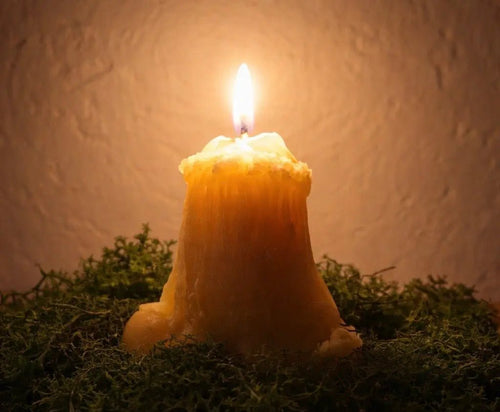
Candles marked with evenly spaced lines could estimate the passing of hours as the wax melted.
In East Asia, specially prepared incense sticks and powdered incense burned at carefully controlled rates.
Some incense clocks even released small metal balls onto trays at regular intervals, producing audible signals as time passed.
Although not perfectly accurate, these devices allowed people to measure time indoors without sunlight or flowing water.

Hourglasses
The hourglass, or sandglass, probably appeared during the Middle Ages.
Instead of water, it used fine sand flowing between two glass bulbs.
Once turned over, the sand passed through a narrow opening at a nearly constant rate.
Hourglasses became especially useful aboard ships because they continued working even when the vessel was moving—something water clocks struggled to do.
For centuries, sailors used hourglasses to measure watches, estimate speed and help navigate across the oceans.

Mechanical Clocks
By the Middle Ages, growing towns, monasteries and governments required a more reliable way to measure time than sundials or water clocks.
Around the late 13th century, the first mechanical clocks appeared in Europe.
Instead of using the Sun, water or sand, these clocks used a system of gears powered by falling weights.
A mechanism called an escapement released the gears in small, regular steps, allowing the clock to keep time.
Unlike earlier methods, mechanical clocks could operate continuously, day and night.
However, they were often inaccurate, sometimes gaining or losing more than an hour each day.

Church Towers and Public Clocks
Mechanical clocks were expensive and enormous.
Rather than being placed inside homes, they were installed in church towers, castles and town halls.
Large bells announced the hours to everyone living nearby.
For the first time, an entire community could organise daily life around the same clock.
Work, markets, religious services and public meetings increasingly followed fixed times rather than simply sunrise or sunset.
This marked a major change in how societies viewed time.

Astronomical Clocks
During the late Middle Ages, some clockmakers built extraordinary mechanical clocks that displayed far more than the hour.
In addition to telling time, astronomical clocks could show:
- The position of the Sun
- The phases of the Moon
- The zodiac
- The date
- Important feast days
- Sometimes the known planets
These clocks combined astronomy, engineering and craftsmanship into a single machine. They reflected the medieval view that understanding the movements of the heavens was closely connected to measuring time on Earth.
The most famous example is the Prague Astronomical Clock, installed in 1410, which still operates today. Similar clocks were later built in cities across Europe, serving both as public timekeepers and as demonstrations of scientific knowledge.
Although they were never common, astronomical clocks marked an important step in the evolution of mechanical timekeeping. They showed that clocks could do more than count the hours—they could model the rhythms of the cosmos.

Clock Faces and Hours
Early mechanical clocks often had only one hand.
The hour hand was sufficient because everyday life did not require greater precision.
Minute hands became common centuries later as clockmaking improved.
The familiar clock face divided the day into twelve hours, continuing a numbering system inherited from ancient civilizations.
Most historians believe this tradition originated in Ancient Egypt and Babylon, whose influence later spread through Greece and Rome.

Springs Replace Weights
By the 15th century, clockmakers developed mainsprings.
Instead of being powered by heavy hanging weights, clocks could now store energy inside a tightly wound spring.
This made clocks:
- Smaller
- Portable
- Suitable for homes
- Easier to transport
Spring-powered clocks eventually led to the first watches.
Although convenient, they were still not particularly accurate because the spring’s force changed as it unwound.

The Pendulum Clock
A major breakthrough came in 1656, when Dutch scientist Christiaan Huygens invented the pendulum clock.
A pendulum swings back and forth at a nearly constant rate.
By controlling the clock’s escapement with a pendulum, accuracy improved dramatically.
Many pendulum clocks lost only a few seconds each day instead of several minutes or hours.
For more than two centuries, pendulum clocks became the world’s most accurate timekeepers and transformed astronomy, navigation and scientific research.

Pocket Watches
Advances in miniature springs allowed watches to become small enough to carry.
Early pocket watches appeared during the 16th century and became increasingly popular among merchants, sailors and wealthy families.
Although less accurate than large pendulum clocks, they allowed people to carry personal time wherever they travelled.
By the eighteenth century, improvements in watchmaking greatly increased their precision.

Marine Chronometers
Knowing the exact time became essential during the Age of Exploration.
Sailors could determine their latitude fairly easily using the Sun or stars.
Determining longitude was far more difficult.
The solution came from the marine chronometer.
In the eighteenth century, English clockmaker John Harrison developed highly accurate clocks that continued keeping precise time even aboard moving ships.
By comparing local noon with the chronometer’s reference time, navigators could calculate their longitude with remarkable accuracy.
Marine chronometers revolutionised navigation and greatly improved the safety of long-distance sea voyages.

Railway Time and Standard Time
Before the nineteenth century, every town kept its own local solar time.
Noon simply meant the moment the Sun reached its highest point above that location.
As railways expanded, this system became increasingly impractical.
Train timetables required every station to use the same time.
Countries gradually adopted standard time, allowing clocks across large regions to be synchronised.
This change laid the foundation for the modern time zones used today.
Time Zones
For most of history, every town kept its own local time.
Noon simply meant the moment the Sun reached its highest point in the sky. Since the Sun reaches this point at slightly different times in different places, neighbouring towns could have clocks that differed by several minutes.
When people rarely travelled long distances, this caused few problems.
The arrival of railways changed everything.
Why Time Zones Were Needed
By the nineteenth century, trains connected cities across entire countries.
If every town continued using its own local solar time, railway timetables became confusing and sometimes dangerous.
A train leaving one city at 10:00 might appear to arrive in another city before it had even departed according to local clocks.
To solve this problem, countries began adopting a single standard time across large regions.
These regions became known as time zones.
How Time Zones Work
Earth rotates once every 24 hours.
As it rotates, the Sun appears to move across the sky.
Since Earth is divided into 360 degrees of longitude, it turns approximately:
- 15 degrees every hour
- 1 degree every 4 minutes
This provides the basis for modern time zones.
Although many time zones roughly follow lines of longitude, political borders, coastlines and practical considerations often cause them to bend.
As a result, some countries share one time zone across large distances, while others use several.
Greenwich Mean Time (GMT)
During the nineteenth century, nations needed a common reference point for global navigation and communication.
In 1884, delegates from twenty-five countries met at the International Meridian Conference in Washington, D.C.
They agreed that the Prime Meridian would pass through the Royal Observatory at Greenwich, England.
This became 0° longitude.
Time measured from this meridian became known as Greenwich Mean Time (GMT).
For many years, GMT served as the world’s principal time standard.
Maps, navigation and international shipping all relied upon it.
Coordinated Universal Time (UTC)
As technology improved, scientists discovered that Earth’s rotation is not perfectly constant.
Tiny variations caused by tides, earthquakes and movements within Earth’s interior mean that the length of a day changes slightly over time.
Because of this, a more precise system became necessary.
Today, the world’s official time standard is Coordinated Universal Time (UTC).
Unlike GMT, UTC is based on extremely accurate atomic clocks rather than Earth’s rotation.
Although most everyday clocks still refer to GMT in conversation, UTC is now used by:
- Aviation
- Space exploration
- Scientific research
- Telecommunications
- Computer networks
- International broadcasting
Leap Seconds
If UTC followed only atomic clocks, it would slowly drift away from Earth’s actual rotation.
To keep civil time aligned with the position of the Sun, an occasional leap second has been added to UTC.
Instead of changing the calendar, one extra second is inserted when necessary.
Leap seconds are extremely rare and are announced in advance by international scientific organisations.
Recent international agreements aim to phase out leap seconds by 2035, although UTC will remain the global time standard.
The International Date Line
Time zones explain the hour.
The International Date Line explains the date.
The line follows roughly 180° longitude through the Pacific Ocean.
Crossing it changes the calendar by one day.
- Travelling west advances the date by one day.
- Travelling east moves the date back by one day.
The line is not perfectly straight.
It bends around islands and national borders so neighbouring communities remain on the same calendar day.
Without the International Date Line, travelling around the world would eventually leave calendars out of sync.
Why GPS Needs Accurate Time
Modern navigation depends on extraordinarily precise timekeeping.
Global Positioning System (GPS) satellites continuously transmit both their position and the exact time according to onboard atomic clocks.
Your phone or navigation device compares the arrival times of signals from several satellites.
Because radio waves travel at the speed of light, even an error of one millionth of a second would produce a position error of hundreds of metres.
Accurate time allows GPS receivers to calculate location with remarkable precision.
Without precise clocks, modern satellite navigation would not function.

Quartz Clocks
For centuries, pendulum clocks were the most accurate way to measure time.
That changed in the 20th century with the invention of the quartz clock.
Quartz is a naturally occurring crystal that vibrates at a remarkably steady frequency when an electric current passes through it. This property, known as the piezoelectric effect, allows quartz clocks to measure time far more accurately than mechanical clocks.
Most modern wall clocks, watches and digital clocks use quartz technology.
Quartz Watches
The first commercially successful quartz watches appeared in the late 1960s.
Unlike mechanical watches, which rely on gears and springs, quartz watches use:
- A battery
- A tiny quartz crystal
- An electronic circuit
The crystal vibrates 32,768 times every second, and the electronic circuit counts these vibrations to keep extremely accurate time.
Quartz watches were cheaper to manufacture, required less maintenance and were generally more accurate than traditional mechanical watches.
This period became known as the Quartz Revolution, transforming the watchmaking industry around the world.

Atomic Clocks
Even quartz clocks are not perfect.
Scientists needed even greater precision for astronomy, satellite navigation and scientific research.
The solution was the atomic clock.
Rather than measuring swinging pendulums or vibrating crystals, atomic clocks measure the natural vibrations of atoms.
Because these vibrations occur at an extraordinarily stable frequency, atomic clocks are the most accurate timekeepers ever built.
Caesium: The World’s Time Standard
Today, the international definition of one second is based on the caesium-133 atom.
One second is defined as the time taken for a caesium atom to complete:
9,192,631,770 vibrations
Every atomic clock around the world measures time using this internationally agreed standard.
This allows countries to maintain identical definitions of the second regardless of location.

Optical Atomic Clocks
Scientists are already developing the next generation of atomic clocks.
Instead of using microwaves like caesium clocks, optical atomic clocks measure atoms using visible light.
Because light vibrates at much higher frequencies, these clocks may become even more precise.
Some experimental optical clocks would lose less than one second over billions of years.
Although they are not yet the international standard, they represent the future of precision timekeeping.
Why Accurate Time Matters
Modern society depends on incredibly accurate time.
Precise clocks synchronise:
- GPS navigation
- Internet communication
- Mobile phone networks
- Financial transactions
- Air traffic control
- Scientific research
- Space exploration
- Electrical power grids
Without accurate timekeeping, many of the technologies we rely on every day would quickly fail.
The Future of Timekeeping
Humanity’s search for more accurate time has never stopped.
Researchers continue developing clocks capable of measuring time with astonishing precision, opening new possibilities in physics, astronomy and space exploration.
Future clocks may help scientists better understand gravity, detect subtle changes in Earth’s shape and even test fundamental theories about the universe.
Sources
Primary References
- National Institute of Standards and Technology (NIST)
- Bureau International des Poids et Mesures (BIPM)
- Royal Observatory Greenwich
Recommended Reading
- David S. Landes — Revolution in Time
- David Rooney — About Time
- E. G. Richards — Mapping Time
- Encyclopaedia Britannica — Clock, Timekeeping, Atomic Clock
- Royal Observatory Greenwich — History of Timekeeping



0 comments