
Bee Bread
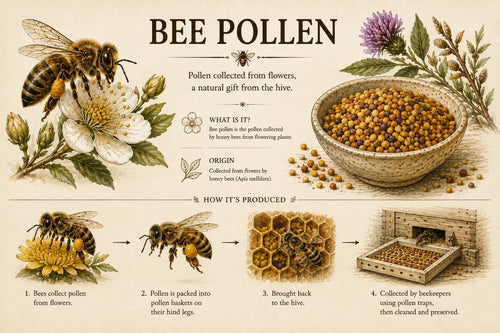
Bee bread is fermented bee pollen stored inside honeycomb cells. Honey bees collect pollen from flowers, mix it with small amounts of nectar or honey and their own secretions, then pack it tightly into the comb where it undergoes natural fermentation.
What is it?
Bee bread is one of the colony’s main sources of protein and other nutrients. Unlike loose bee pollen, which is collected directly from flowers, bee bread has been processed and fermented by the bees inside the hive.
The fermentation helps preserve the stored pollen and changes its composition, making it easier for bees to use as food.
Origin
Bee bread is naturally produced by honey bees (Apis mellifera) wherever colonies forage on flowering plants.
Its colour, flavour and composition vary depending on the plants available to the bees. A single piece of bee bread may contain pollen from several different plant species.
How is it produced?
Worker bees collect pollen from flowers and bring it back to the hive in their pollen baskets.
The pollen is packed into honeycomb cells and mixed with small amounts of nectar or honey and bee-derived substances. Bees compress it firmly into the cells, creating an environment where microorganisms naturally ferment the pollen.
Lactic-acid-producing microorganisms play an important role in this fermentation. Once the process is established, the stored bee bread can remain preserved within the comb for extended periods.
History & Traditional Uses
Bee products have been valued as foods by humans for thousands of years. Bee bread itself is less commonly documented in historical sources than honey, pollen and royal jelly, but it has been collected and consumed in various traditional beekeeping cultures.
These traditional uses describe historical practices rather than established medical benefits.
Naturally Occurring Compounds
Bee bread can naturally contain:
- Proteins
- Amino acids
- Carbohydrates
- Lipids and fatty acids
- Vitamins
- Minerals
- Polyphenols
- Flavonoids
- Organic acids
- Naturally occurring microorganisms associated with fermentation
Its composition varies considerably according to the botanical sources of the pollen, season, geography and fermentation conditions.
Interesting Facts
- Bee bread is essentially fermented pollen.
- Bees store it inside honeycomb cells rather than keeping it as loose pollen.
- A single hive can contain bee bread made from many different flowering plants.
- Fermentation gives bee bread its characteristic tangy, earthy flavour.
- Its colour can range from pale yellow and orange to deep brown depending on the pollen sources.
How We Use It at EirHolt
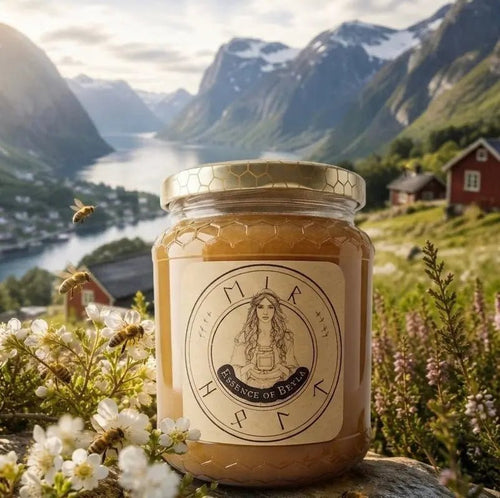
At EirHolt, we source bee bread from trusted beekeepers and use it in our Essence of Beyla blend alongside raw Leatherwood honey, fresh royal jelly, bee pollen and propolis.
We choose bee bread in its naturally fermented form rather than treating it as simply another powdered pollen ingredient. Its distinctive texture, flavour and fermentation are part of what makes this traditional hive food unique.
Related Reading
- Raw Honey
- Leatherwood Honey
- Bee Pollen
- Royal Jelly
- Propolis
- Beeswax
- Understanding Bee Products
Products Containing This Ingredient
Information on this page is provided for educational purposes only and is not intended as medical advice. Traditional uses do not necessarily reflect current scientific evidence.
0 comments