
Juniper Berry
Juniper berries are the berry-like seed cones of juniper plants, most commonly Juniperus communis. Despite their name, they are not true berries. They develop slowly on the plant and are best known for their deep blue-purple colour, resinous aroma and distinctive pine-like flavour.
What is it?
Juniper berries are fleshy cones produced by juniper trees and shrubs in the Juniperus genus.
The mature cones of common juniper are typically deep blue to blue-black and contain several small seeds. Their flavour is aromatic, resinous, slightly bitter and citrus-like.
Origin
Common juniper (Juniperus communis) has one of the widest natural distributions of any woody plant. It occurs across much of Europe, Asia and North America, extending into northern and mountainous regions.
It grows in a variety of habitats, including heathlands, grasslands, open woodland and rocky areas.
How is it produced?
Juniper berries develop slowly, often taking around two to three years to mature. Different stages of ripeness can occur on the same plant at the same time.
Mature cones are harvested, cleaned and dried before they are commonly used whole or ground into a powder.
History & Traditional Uses
Juniper has a long history of use as a culinary and aromatic plant across Europe and other regions where it grows naturally.
The berries have traditionally been used to flavour foods and drinks, particularly rich meats, fermented foods and beverages. Juniper has also been used in traditional herbal practices and as an aromatic botanical.
These historical uses describe traditional practices rather than established medical benefits.
Naturally Occurring Compounds
Juniper berries naturally contain:
- Essential oils
- Monoterpenes
- Sesquiterpenes
- Flavonoids
- Phenolic compounds
- Organic acids
- Natural sugars
- Fibre
Their composition varies according to species, growing conditions, maturity and processing.
How We Use It at EirHolt
At EirHolt, we use organic juniper berry powder in Skadi’s Forage, together with bee pollen, organic rosehip shell powder and bilberry powder.
We use the dried, ground berry as a whole botanical ingredient, keeping its naturally aromatic character within the blend.
Related Reading
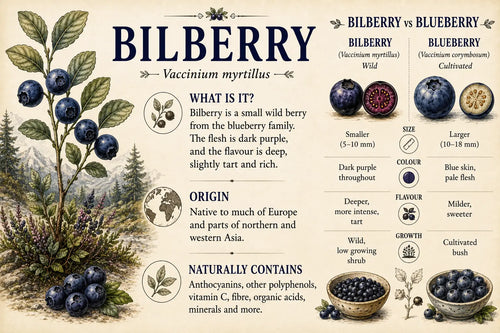
- Bilberry
- Rosehip
- Bee Pollen
- Raw Honey
- Whole-Food Powders
- Skadi’s Forage
Products Containing This Ingredient
Information on this page is provided for educational purposes only and is not intended as medical advice. Traditional uses do not necessarily reflect current scientific evidence.


0 comments