
Bee Pollen
Bee pollen is the pollen collected by honey bees from flowering plants. Bees gather the fine pollen grains, mix them with a small amount of nectar and their own secretions, and carry them back to the hive as a source of food.
What is it?
Pollen is the reproductive material produced by flowering plants. It contains nutrients needed for plant reproduction and naturally varies between plant species.
Honey bees collect pollen using the hairs on their bodies and pack it into small pellets on their hind legs, known as corbiculae or pollen baskets.
Unlike bee bread, bee pollen has not undergone fermentation inside the hive.
Origin
Bee pollen comes directly from flowering plants visited by honey bees (Apis mellifera).
Its colour, flavour and composition can vary greatly depending on the flowers available. A single pollen collection may contain pollen from many different plant species.
How is it produced?
Honey bees collect pollen while foraging on flowers. They moisten the pollen with nectar and bee secretions and compress it into pellets on their hind legs.
Beekeepers can collect some of this pollen using specially designed pollen traps at the entrance of a hive. The collected pollen is then cleaned and carefully dried or otherwise preserved, depending on how it will be used.
History & Traditional Uses
Pollen has been collected and consumed by humans in different cultures for centuries. Bee-collected pollen has also been used as a traditional food in various beekeeping communities.
These historical uses describe traditional practices and should not be interpreted as established medical benefits.
Naturally Occurring Compounds
Bee pollen can naturally contain:
- Proteins
- Amino acids
- Carbohydrates
- Lipids and fatty acids
- Vitamins
- Minerals
- Polyphenols
- Flavonoids
- Plant pigments
- Naturally occurring enzymes
Its composition can differ substantially according to the plant species, season, geography and environmental conditions.
Interesting Facts
- Bee pollen is plant pollen collected by bees; it is not made by bees.
- The tiny pellets on a bee’s hind legs can contain pollen from several different flowers.
- Pollen colour can range from pale yellow and cream to orange, red, green and almost black.
- Bee pollen and bee bread are different: bee pollen is collected pollen, while bee bread is pollen that has been stored and naturally fermented inside the hive.
How We Use It at EirHolt
At EirHolt, we use bee pollen in two of our blends.
In Essence of Beyla, it is combined with raw Leatherwood honey, fresh royal jelly, bee bread and propolis, bringing together several distinct products of the hive.
We also use bee pollen in Skadi’s Forage, where it is combined with organic rosehip shell powder, organic bilberry powder and organic juniper berry powder. Here, bee pollen brings a bee-derived ingredient together with whole powdered berries and botanicals.
Products Containing This Ingredient
Related Reading
- Raw Honey
- Leatherwood Honey
- Bee Bread
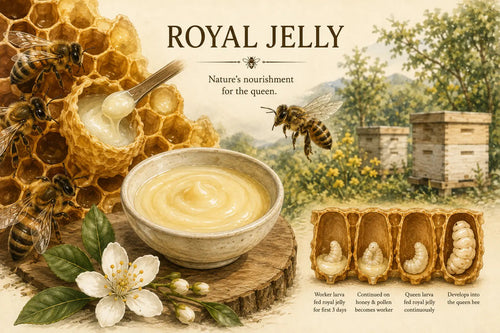
- Royal Jelly
- Propolis
- Rosehip
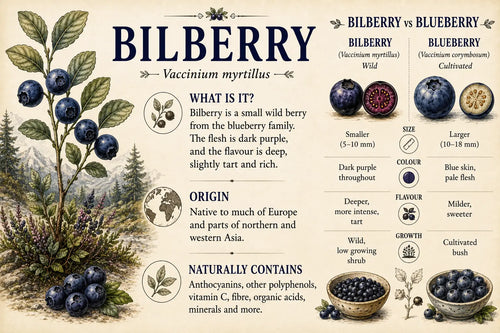
- Bilberry
- Juniper Berry
- Skadi’s Forage
0 comments